A Small Circus
Hans Fallada’s 1947 novel Alone in Berlin was an international phenomenon when it first appeared in English three years ago. In 2012 Penguin Classics are delighted to bring you the first ever English translation of another Fallada gem – the 1931 novel A Small Circus. Once again Michael Hofmann has done his magic, transforming Fallada’s vibrant dialogue – which accounts for about two-thirds of the novel - into wonderfully readable and convincing English. As Fallada’s biographer Jenny Williams says in her foreword, ‘A Small Circus … is one of the best fictional representations of the forces that brought the Weimar Republic to its knees and paved the way for National Socialism.’ One prominent contemporary critic said it was ‘so terribly genuine, it is frightening.’ Yet this vivid novel, full of memorable characters, whether politicians, journalists, farmers or local ‘pillars of the community’ is not only of interest for the light it sheds on the rise of Nazism in Germany. It is also a book that captures the corruption and hypocrisy of politicians and the media in ways that resonate just as much in Britain today as in rural Germany at the time. Journalists, editors and newspaper owners in A Small Circus are not just content with reporting the news but also in making it.
Adam FreudenheimPenguin Classics Publisher
Alice in Wonderland
On Feburary 9th, a huge retrospective of Japan’s most famous artist, Yayoi Kusama, will open at the Tate Modern. Since childhood, Kusama has been afflicted with a condition that makes her see the world in a surreal, almost hallucinogenic way. Perhaps unsurprisingly she was influenced from an early age by the phantasmagoric world of Alice in Wonderland. Kusama is also fascinated by childhood and the way adults have the ability, at their most creative, to see things the way children do.
To view Kusama's illustrations, take a look inside Alice in Wonderland.
Alexis KirschbaumEditorial Director - Penguin Classics
Recent Features
Alone in Berlin was first published in English, to near-universal acclaim, nearly three years ago. The enthralling story of one couple’s fruitless but inspiring attempt to resist the Nazis captured the imagination of readers. It became a true phenomenon when the paperback first appeared in January 2010, and it continues to sell incredibly strongly. It’s been reissued in German, translated into a dozen languages, and is currently being made into a major feature film due for release in early 2013. To celebrate this success we’ve released a collectible new hardback edition, in its own slipcase, using the striking design from the original hardback. It’s a perfect moment to take another look at Alone in Berlin, in anticipation of our forthcoming first-ever English translation of Hans Fallada’s novel A Small Circus which is out early next year (1st February).
Adam FreudenheimPenguin Classics Publisher
Before Jack Kerouac went On the Road, he went to sea as a sailor, touring with the United States Merchant Marine in the summer of 1942. He was twenty years old and had just dropped out of Columbia University because, as he wrote in his journal, ‘I want to study more of the earth, not out of books but from direct experience’. His subsequent experiences at sea went into his first novel, The Sea is My Brother, which he wrote out by hand after he returned home. The manuscript was lost for years during Kerouac’s lifetime, but we’re now publishing it in a hardback edition along with other early stories and letters. Like On the Road, this ‘lost’ novel is about the travelling life and the desire to escape conventional society, and, above all, it explores the themes of friendship and brotherhood through the central relationship between two sailors. I can’t wait to see Walter Salles’s version of On the Road next year, starring Sam Riley and Kirsten Dunst – incredibly, it’s the first time the book has ever been made into a film. In the meantime, all Beat fans should read this rediscovered work, which gives a fascinating insight into the writer who would produce one of the most famous novels of our times just a few years later.
Jess HarrisonClassics Editor
Pale Horse, Pale Rider: Katherine Anne Porter
To mark the publication of three great women writers in Modern Classics we're sharing with you Sarah Churchwell's excellent and thought-provoking introduction to Katherine Anne Porter's Pale Horse, Pale Rider.
'Drabble writes so penetratingly about the female condition that it is impossible not to laugh, wince and admire' Amanda Craig, New Statesman
'Any time spent with Penelope Lively is a joy' Observer
'Porter's stories take accurate & deadly aim..dazzling' The New York Times
Read the introduction to Katherine Anne Porter's Pale Horse, Pale Rider.
This month we're also publishing Margaret Drabble, winner of the John Llewellyn Rhys Memorial Prize and the James Tait Black Memorial Prize:
The Seven Sisters,
The Needle's Eye,
Jerusalem the Golden,
and the Booker-winning Penelope Lively's
Heat Wave.
Marketing, Penguin Press
I don't think I've been as excited since Alone in Berlin, as I am about the publication of a new Penguin Classic, C. S. Forester's The Pursued. This dark, twisted psychological thriller by the author more famous for his Hornblower stories was lost for over six decades and never published, until a smudged typescript resurfaced at auction recently. The Pursued, the story of a mother avenging her daughter's murder, is not only a rattling good read, it's also a whodunnit that is hugely ahead of its time. Unlike the works of Forester's contemporary, Agatha Christie, this novel (and the two others we're publishing in November, Plain Murder, and Payment Deferred) is concerned with getting into the head of a killer, exploring why we murder and how easily our actions can spiral out of control, reminding me of Patricia Highsmith. There are no dinner parties and cruises here, only shabby rooms, smoky cafés, dirty London backstreets and seedy, often desperate lives, all brimming with deliciously grimy atmosphere. There are also some surprisingly strong female characters. If, like me, you long to read something dark at this time of year, you'll love the thrillers of C.S. Forester – the man who took English crime writing in a new direction.
Louise WillderCopywriter Manager, Penguin Press
The New Penguin Book of American Short Stories
The great thing about short stories is that their authors can't bang on for pages, setting the scene by saying how nice the trees and clouds are. They must be pithy and get to the heart of things. This collection is a sort of high power concentrate of some of the best words by Hawthorne, Twain, Hemingway, Parker, Faulkner, Fitzgerald, Updike, Carver and more, which zooms you through two centuries of life in the U.S., from small town devil worship and slavery to zoot suits, moonshot and modern day sexual politics. Some of my favourite stories are by authors I didn't know.
I love Stephen Crane's 'An Episode of War' in which a young lieutenant in the Civil War is hit by a long range enemy bullet during a lull in the fighting. Crane describes how the soldier 'cried out, and looked quickly at a man near him as if he suspected it was a case of personal assault'. The tale is full of small, perfect observations like this, which take you straight to the uncanny place where mundanity and crisis collide. In the very funny 'Aunt Hetty on Matrimony' by Fanny Fern, an old lady's advice to her young friends that 'Love is a farce; matrimony is humbug; husbands are domestic napoleons' is extra-enjoyable when you see that it was written as far back as 1851. A lot of the stories give you unexpectedly moving or crazy viewpoints on life - and sometimes on death too. I especially like how Lorrie Moore puts things in 'Starving Again': 'I want to be laid out in the woods like Snow White, with a gravestone that reads Gotta Dance'.
Read more on The New Penguin Book of American Short Stories.
Becky StocksArt Department, Penguin Press
It's Charles Dickens's 200th anniversary in 2012, and what better way to start the celebrations than by reading all of his novels? (Well, you could argue that a cake might be enough, but at Penguin we don't like to do things the easy way). That's why some of us have set ourselves the Herculean task of reading all sixteen novels, one a month, from The Pickwick Papers to The Mystery of Edwin Drood, finishing some time next year.
At the moment we're on the foothills of the Dickens mountain, having worked our way through Pickwick, Oliver Twist and the astounding David Copperfield – that's 2091 pages already!*
There will be a full Dickens page coming soon on the Penguin Classics website, for you to explore, join in and find out more. In the meantime, take a look at the Penguin blog, to see our views on what we've read so far. Here are some comments from one of our readers, Becky Stocks from the Art Department, on Mr Pickwick:
"The Pickwick Papers made be feel very merry about the 'reading-the-complete-works' project. I love Dickens' sense of humour, especially the way the dark stuff is funny and the funny stuff is dark. Pickwick reminds me of reading a tabloid in that its tone veers around oddly between the farcical, the morbid the salacious and the fun. Sam Weller the valet is Dickens' first great character and, as the amiable Mr Pickwick prances around the countryside with his pompous club, 'observing human nature' as he goes, Sam is on hand to remind him that the London poor don't go to debtors prison for the novelty value, and that Mr Pickwick's delicious 'veal' picnic pie might, just possibly, be made of kitten. There's a holiday, celebratory feel to the whole book and staggering amounts of drink are consumed by all characters, including the temperance men.
There exists a famous student drinking game based on the film Withnail and I which requires that, while watching, you try to keep up with the characters, drink for drink. If you were to attempt this while reading your way through the Pickwick papers, consuming all the grog, hot pine-apple rum, dog's nose, steaming bishop, reeking rum punch, milk punch, hot brandy elder wine and negus in these pages, by the end you would own very many punch bowls, and be dead.
I enjoyed Dickens' satirical digs at surgeons, local newspaper reporters, and no win no fee lawyers. I was sad when I reached the last page."
*Did you know that Dickens's novels total 3.86 million words? According to unscientific calculations, if you read them non-stop, without eating or sleeping, you could actually finish the lot in two weeks.
Louise WillderCopywriter Manager, Penguin Press
Penguin Modern Classics Postcards
Why read the Classics? So asked Italo Calvino in his 1991 essay of the same name.
Because they endure through the ages; because they come to represent the whole universe; because they are wonderful. One reason we'd like to add is 'because then you can own this
rather lovely set of postcards & admire (or be shocked by) the faces of your favourite authors'. Desirable and collectable, this elegant box features memorable and iconic photographs of the greatest writers of the last century, and celebrates the 50th anniversary of the prestigious Penguin Modern Classics
list, which has been shaping the reading habits of entire generations since 1961. All the big names are here: Beckett, Camus, Kafka, Nabokov and Woolf, along with some of the lesser-known gems of this wonderful list. Send them to friends, frame them and stick them on your wall, play endless entertaining parlour games with them.
Either way, this is an ideal Christmas gift for readers.
Penguin Classics Editorial Co-ordinator
The Demon, Last Exit to Brooklyn, The Room
Raymond Radiguet & Henri-Pierre Roché
Hubert Selby Jr's novels will always be part of a New York that no longer exists, the one before Giuliani's clean up and before Brooklyn came to resemble an American mall for aquisitive cool kids. Selby's New York is one of drug-craving, cheap prostitutes, and various soul-sicknesses, one that caters to the sins of its inhabitants instead of curtailing them, or at least cloaks them in the dark. It's this bleakness that I'm drawn to in Selby's novels, and the fact that such sophisticated emotion, drama and love can exist amongst depravity.
Read more on The Demon, Last Exit to Brooklyn, The Room.
Alexis KirschbaumEditorial Director - Penguin Classics
Hot-headed country boy d'Artagnan arrives in Paris determined to prove himself and join the king's renowned band of bodyguards. His brilliant swordsmanship impresses the Three Musketeers, Porthos, Aramis and Athos, and he joins them as they uncover a plot against the king. Together, they encounter seduction, spies and fatal poisonings (and deal out sword blows and quips in equal measure) as they attempt to outwit the villainous Cardinal Richelieu and seductive femme fatale Milady – and ultimately save France from destruction.
Alexandre Dumas's perennially popular novel crackles with action, drama, passion and adventure, and is as gripping today as it was in 1844, reanimated by Richard Pevear's bold and lively translation. And this autumn, the classic adventure story is coming to the big screen in a 3-D extravaganza starring Orlando Bloom, Matthew Macfadyen and Milla Jovovich. If you're after classic escapism, now is definitely the moment to rediscover the original page-turning, swashbuckling blockbuster.
Editor - Penguin Classics
The Devil in the Flesh and Jules et Jim
Raymond Radiguet & Henri-Pierre Roché
Raymond Radiguet and Henri-Pierre Roché were both part of the avant-garde set in Paris in the early years of the twentieth century, mixing with the painters, poets and pioneering film-makers of the period. But whereas Roché went on to become an art dealer and journalist in New York and lived to nearly eighty, Radiguet died tragically early at just twenty, having contracted typhoid fever after a holiday with Jean Cocteau. He was already a literary sensation by the time of his death: his first novel, The Devil in the Flesh, had been a great succès de scandale on publication in 1923, as notorious for its author’s age as for its racy subject matter. Recounting the illicit love affair between a teenage boy and a young wife whose husband is away fighting in the First World War, the novel continues to shock with its unflinching depiction of sexual jealousy and possessiveness.
In contrast to the teenage Radiguet, Roché didn't write his first novel, Jules et Jim, until he was in his seventies (it was later made by Truffaut into the famous film). But like his precocious compatriot, his story centres on the complications of a love triangle. Roché's lovers are Jules, short and plump; Jim, tall and thin; and the capricious Kate, with a smile the two friends have decided to follow forever.
Despite their focus on love, the two novels couldn't be more different. The Devil in the Flesh is a coldly brilliant dissection of the selfishness and anguish of young love; Jules et Jim is a rapturous celebration of bohemian love, life and passion. If it's hard to believe that The Devil in the Flesh was written by a teenager, it's equally hard to believe that a novel as fresh and youthful as Jules et Jim was written by an old man. Both books are absolutely wonderful, and very, very French - in the best possible way.
Jessica HarrisonEditor - Penguin Classics
Eudora Welty
During the years of the Depression, Eudora Welty worked as a photographer, travelling all around her native state of Mississippi and taking pictures of its inhabitants. The stories collected in her 1949 masterpiece, The Golden Apples, reflect her photographer’s eye for the telling visual detail, as well as her poet’s way with words. In the story ‘June Recital’, for example, a party is in full flow: ‘Virgie and her older brother Victor ran wild all over everywhere, assaulting the crowd, where couples and threes and fives of people joined hands like paperdoll strings and wandered laughing and turning under the blossoming China trees and the heavy crape myrtles that were wound up in honeysuckle’. All the stories in the collection are linked, set in the small town of Morgana in the Mississippi Delta, and feature recurring characters who fade in and out of focus. One of the most memorable of these is Virgie Rainey, seen first as a baby who swallows a button, then as a wild young girl meeting up with a sailor in an abandoned house, and later still as a lonely woman past forty.
Welty is particularly good at creating texture and character in a way that reminded me of Virginia Woolf, but her voice is always uniquely her own, rooted in the American Deep South. Despite being compared to Faulkner and Chekhov, she isn’t as widely read as she deserves; The Golden Apples is the perfect introduction for readers who are yet to encounter this dazzling, complex, and deeply atmospheric writer.
Jessica HarrisonEditor - Penguin Classics
Kingsley Amis
Reading Kingsley Amis' Complete Stories is like spending an evening with an unusually witty drinking companion. You are introduced you to a hundred amusing, interesting and disturbing 'imagine if..' ideas, and you are left feeling that you have been splashed liberally with booze. The author's famed passion for pub-based activities is expressed in a series of stories in which a time machine is invented for the lofty task of discovering what fine wines taste like in different eras. Amis is adept, too, at genre-hopping, and sci-fi, alt.history and mystery appear in this collection alongside his trademark social comedy. There is also a Sherlock Holmes spoof, an original twist on the vampire genre, and a genuinely alarming story about a British agent's uncovering of dark practices on a Greek Island. I can't expand upon that last one because it's just too unsettling for this website. Throughout these stories there lurks much mischievous satire on human relationships. Kingsley Amis has been unfashionable for a while, due in part to his curmudgeonly image. Perhaps it's time for a re-evaluation. This, the first complete edition of his short fiction, with its brilliant new jacket illustration by Jonathan Burton, depicting Amis himself as the original angry(ish) young man, is a great place to start.
Becky StocksDesign Co-ordinator, Penguin Press
Peter Ackroyd
I've always been drawn to the romance (small 'r') of the Middle Ages: the jousts, kings and queens, intrigue at the highest echelons of power, the quests, moral compromise, sense of duty and 'man love', not to mention the secret affairs with the potential to bring down kingdoms. The stories of King Arthur are by now so famous that it may feel like we already know them - but how many of us have actually read Thomas Malory’s four volume Middle English original, Le Morte D'Arthur? Most likely, despite an interest, we have never been able to bring ourselves to pick up the book. It was always a little bit forbidding, a little old, much too long and never attractively presented.
With this unwieldiness in mind, last year we published Peter Ackroyd's modern rendering of Thomas Malory's Le Morte D'Arthur, and it was met with enthusiastic acclaim by critics and readers. Philip Pullman wrote 'I admire this version enormously… This story has to move with both swiftness and dignity, and yoking those two qualities together is not an easy task; but Ackroyd does it with ease.' Michael Caines wrote that 'the majesty of Malory's book survives too… a thrilling piece of writing.' And David Robson wrote in the Sunday Telegraph that 'In this ingenious decanting of an old wine into a new bottle, Peter Ackroyd has taken a glorious part of our cultural heritage and made it more accessible to the readers of the 21st century.'
Now that it's published in paperback, it's even more accessible. Why not revisit this classic as a summer read?
Alexis KirschbaumEditorial Director, Penguin Classics
June sees the publication of the first tranche of a new hardback series in Penguin Classics, starting with eight titles by Evelyn Waugh, with the rest of his works appearing in this look over the coming months. This series came about because Penguin Classics are now able, for the first time, to publish all of Waugh's oeuvre in its entirety, and we wanted to create a new and collectable series of books to reflect this sense of completeness. They've been carefully designed to give a beautiful reading experience: their cool, elegant covers are fresh and timeless, while echoing many stylings from Penguin's past, including hints of the very first Penguin Classics covers (created by legendary Jan Tschihold), and the Penguin Poets series from the same time. Each story stands alone, with extraneous material stripped out, and even the inside pages have been redesigned to follow the classically perfect proportions of the golden ratio. These are simple, elegant, definitive editions, and we are looking forward to bringing more authors into the series.
Jim StoddartPenguin Press Art Director
View all the Penguin Classics hardback editions
Jan Karski
In 1944 as the war still raged across Europe, Jan Karski published his war memoir in the US as a piece of virtuous propaganda. Karski wanted to write a book that wasn't only an expression of fact, but which was also emotionally and structurally compelling. There is little by way of conventional journalism, but it is an affecting, elegiac, and raw account of what it felt like, not only to be there, but to be entrusted and over burdened with a nation's mortal future.
Karski's passion and courage are movingly in evidence; but it is above all the gravity of his intelligence and his sober sense of responsibility, both for the Polish nation and for the Jews of Europe, that has won my admiration. Story of a Secret State has the immediacy of a war memoir, but also the breadth and authority one would normally expect from a major work of history written long after the events it describes.
Alexis KirschbaumEditorial Director, Penguin Classics
Hear more from Editor Alexis Kirsbaum
H. R. F. Keating
A murder has taken place, sahib,' he said. 'Very well. We will settle down to find out who is responsible. Just as we settle down to find out who killed all the other ten thousand people who are murdered every year.'
As I'm sure you can see, Agatha Christie this ain't. But Inspector Ghote might just fit perfectly into Christie's world of order, of criminality and of Poirot's calm insistence on logic and rationality. Ghote won't allow the hugely wealthy (and hugely fat) Lala Varde to intimidate him or ruin his investigation, and despairs slightly when Varde insists on bewailing this Perfect Murder (only so-called since the victim's name was Mr. Perfect). But with methodical, calm insistence, Ghote will uncover the truth...
And if you needed an excuse to read the Ghote books, why not celebrate the life of Ghote's wonderful creator H. R. F. Keating.
Rainer Maria Rilke
Letters to a Young Poet is a moving, beautiful, wise collection of letters from the poet Rainer Maria Rilke to a young military cadet. Rather than just being about the poetry Kappus, Rilke's correspondant, wanted to discuss, Rilke talks about love, about passion, about religion, and all the choices that one can make - or not make - through a life. It's so lyrical and perfectly-judged, with each letter written to a friend who has now become every reader to open this book. The breadth and beauty of each letter makes it a perfect gift for a lover, a spouse, a distant friend or your closest confidante, and each time I open it I find something fresh to inspire me.
Alexis KirschbaumEditorial Director, Penguin Classics
Buy Letters to a Young Poet now
Note from the Editors
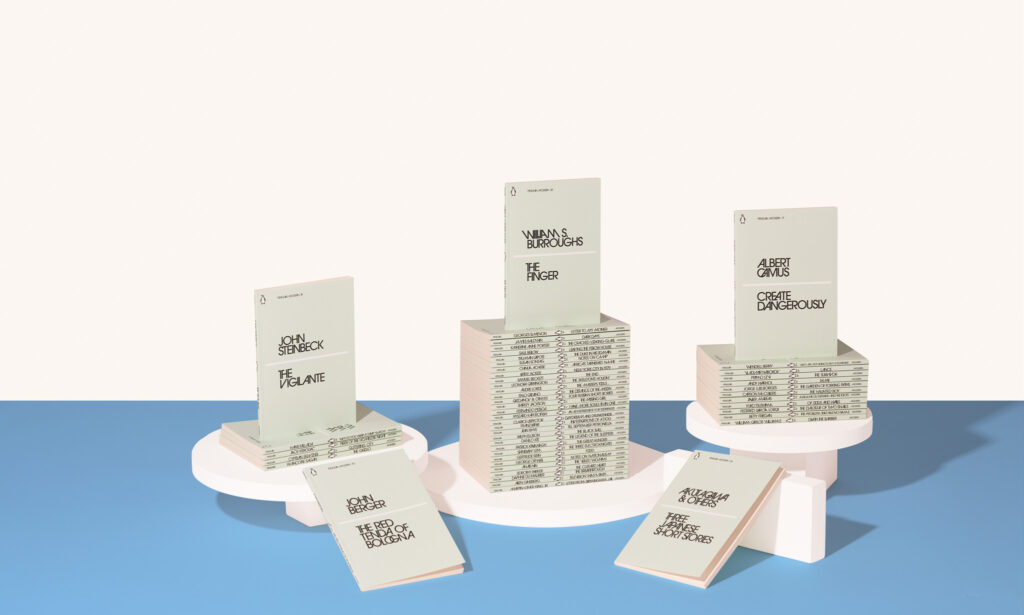
This year marks the 50th anniversary of one of Penguin's most iconic and exciting lists - Penguin Modern Classics. Since 1961 Penguin Modern Classics has been publishing much of the 20th century's most ground-breaking, original writers. To mark the anniversary we're thrilled to be launching a complete new series - Mini Modern Classics. We've focussed on fiction, and short fiction at that, to create what we hope are just the first 50 of many more enticing books to come which include one or more wonderful works of fiction by writers including P.G. Wodehouse, Angela Carter, F. Scott Fitzgerald, Hans Fallada and Shirley Jackson to name just five of them. And at just £3 each they are incredibly good value to boot.
Each individual book has been carefully selected to deliver a quick literary hit. We hope you enjoy reading them as much as we enjoyed putting them together and look forward to any suggestions you might have for writers we should include in the series going forward.
Adam Freudenheim & Simon Winder
Penguin Modern Classics
Visit the Mini Modern Classics website to view all 50 Mini Modern Classics, watch videos and read the design story of Penguin Modern Classics.
Andy Warhol carried a camera with him everywhere he went. At parties with actors and pop stars, in the White House, or on the impoverished streets of New York, he took opportunistic and spontaneous shots that are both strange and surprising. A sense of the weird and wonderful about American culture is evident throughout this book. But it is not the love of kitsch that motivates the eye behind these photographs. From the writing that accompanies the images in America, we see that Andy Warhol had deeply ambiguous feelings about the culture he documented. Yet far from succumbing to simple anger, he developed a complex wit in regard to this ambiguity. America mixes Andy's unique images with this witty writing, and could be a nice way into his longer prose - like Diaries. Most of all Andy Warhol's America shows us there is a strange, ironic beauty in the cruelty and self-destruction beneath our obsession with fame, wealth and freedom.
Patrick Loughran
Editorial Assistant
100 Artists' Manifestos - Selected by Alex Danchev
This collection of 100 manifestos from the last 100 years explores their social and political significance as well as their artistic programme and cultural impact. It proposes the manifesto as a work of art in itself, in effect a new genre, one of the most important artistic expressions of the twentieth century. It embraces such diverse movements as Futurism, Dadaism, Surrealism, Purism, Vorticism, Everythingism, Instantanism, Situationism, Dimensionism, Suprematism, Constructivism, Destructivism, Diasporism, Stridentism and Stuckism, to say nothing of Modernism, Postmodernism and Remodernism. It includes the Cannibalistic Manifesto, the Pandemonic Manifesto, the Superflat Manifesto, the Fluxus Manifesto, the Short Manifesto, the Static Manifesto, the Gentle Manifesto, and even the ------------ Manifesto. It attends to the basic needs – the Futurist Manifesto of Lust is complemented by the Manifesto of Futurist Cuisine. (Not only were the Futurists against the past - they were against pasta.) It gathers together an international array of artists of every stripe, including Boccioni, Kandinsky, Mayakovsky, Rodchenko, Le Corbusier, Picabia, Dali, Vertov, Baselitz, Kitaj, Murakami, and Gilbert and George, together with their allies and collaborators – such figures as Marinetti, Apollinaire, Tzara, Breton, Trotsky, Guy Debord and Rem Koolhaas.
Read one of Alex Danchev's favourite manifestos.
We are all to some extent guilty of trusting rumours about famous literature, and this is perhaps doubly true of a book like the Kama Sutra, where the title itself has become a by-word for sex in our culture. I always associated it, until I read it recently, with naff teenage hippy-love and dorm rooms draped in pseudo-exotic Indian tapestry. Originally, however, the Kama Sutra was intended as an urbane guide to the art of pleasure and sexual relationships, and our new translation by A.N.D. Haksar restores the book to the purity of the ancient Sanskrit original. There is no equivalent to the Kama Sutra in English. What makes it truly exotic and surprising as an un-Western alternative to sexual morality is that it lacks the sentimentality we normally impose on sexual relationships. And equal attention is given to the pleasure of women as to men. While some parts of the book are genuinely useful and illuminating, others, to the modern reader, are curious and entertaining. Under ‘Bewitching a Woman’ Vatsyayana advises smearing ‘the penis with honey mixed with a powder of thorn apple and black pepper’. Ouch, surely. And while it is surprisingly practical in its conception, including chapters such as ‘Rules for Sex’, ‘Permissible Women and Adultery’, ‘Retaliation’, ‘The Quarrel in Love’, each chapter concluding with ‘Some Dos and Don’ts,’ it is a long way from contemporary guidebook bastardisations, such as the Kitchen Kama Sutra: 50 ways to seduce each other outside the bedroom. It has dignity, elegance and seriousness, as well as humour..
Read some extracts from Kama Sutra.
We are delighted to be publishing the very first graphic novel in Penguin Classics, in the form of HOWL adapted from Allen Ginsberg's famous poem by accomplished graphic artist and animator Eric Drooker. Drooker knew and collaborated with Ginsberg, and this original book is based on the long animation sequence he created for the forthcoming biopic of Ginsberg starring James Franco as the poet and John Hamm. Drooker's animation makes you read and visualize this powerful and hugely influential poem - the quintessential, founding work of the Beat movement - in a completely new way. Beautifully produced in four colours throughout, with doublesided printed flaps it is a book for any fan of Ginsberg and the Beats as well as aficianados of graphic novels. The more conventional text-only version of the poem is also available in Howl, Kaddish and Other Poems.
Nikki Lee
Editorial Assistant
View more iconic page spreads from Howl.
This is the first collection of some of the most original, provocative and memorable stories I've read in a long time. Though they aren't quite like anything else, the reader may be reminded of Poe, Lovecraft, Bulgakov, Babel and others. Septuagenarian Ludmilla Petrushevskaya has an enviable literary reputation in Russia - some say she's the best known living writer in Russia since the death of Solzhenitsyn - but despite some of her work appearing in English in the past she remains largely unknown in the UK. There Once Lived a Woman Who Tried to Kill Her Neighbour's Baby should change all that. This collection of 19 stories written over the last 30-odd years is blackly comic and introduces the reader to a world of midnight forests, disturbing deaths, magic and (ocassional) horror. As the translators point out in their introduction to the book, these stories are really a form of nekyia - a night journey, as described in Homer's Odyssey - involving near-death experiences and borderline states.
Adam FreudenheimPenguin Classics Publisher
Christmas means snow. Whatever the actual weather on December 25th, we all know this (even Australians) and we most likely have Dickens to thank for that. He pretty much defined Christmas in the popular imagination with this classic tale, and who am I to flaunt the popular imagination? Design decisions aren't always this simple but this time, it was: Christmas=snow.
Gulliver's Travels
This jacket is all about adventures on the high seas. The rigging, ropes and flags flying and moving in the wind. The colours evoke white-capped waves, white clouds in open skies, and of course, sailor suits (ok, that last one may not strictly belong in Jonathan Swift's shrewd 18th century satire, but come on, what's not to love about a sailor suit?).
Inferno
Here we have men and women on their journey to the flames of hell, ably assisted by pitchfork wielding demons. There was a huge amount of art history to draw on here, from Bosch to Blake. William Blake was something of a childhood hero of mine, so working on a subject he tackled so brilliantly made this book particularly special.
Coralie-Bickford SmithSenior Designer, Penguin Press
View the entire Clothbound Classics Collection
Almost every day for eleven years and at the height of his fame, Andy Warhol would dictate his day’s musings to Pat Hackett over the phone. Stylish, sexy and full off acerbic banter and deadpan humour, these intimate diaries provide a lens into the heady world of art and celebrity in 1970s and 80s New York. Warhol shamelessly name-drops everyone from Jack Nicholson and Bob Dylan to Truman Capote and JFK, and particularly amusing are his descriptions of Liz Taylor (‘Looked like a bellybutton’), Sylvester Stallone (‘Like Mr America with small biceps’), Bianca Jagger (‘God, she’s dumb’) and Nixon (‘Pudgy, like a Dickens character, fat with a belly’). But you also see him on his own terms, not as artist or icon but as the penny-counting obsessive and rather tragic outsider too consumed by his own anxieties to be capable of real emotion. A natural voyeur and truly tireless gossip, Warhol’s reflections on sex, drugs and rock and roll are some of the wittiest, cruellest and most revealing of the twentieth century.
Nikki Lee
Editorial Assistant
Tuesday, November 14, 1978
Truman Capote stopped by, he was visiting Bob MacBride in his studio at 33 Union Square. Truman may be on Lithium, because suddenly he’s happy. But my real theory is that he went out to Long Island and saw Jack Dunphy and that Jack Dunphy agreed to write Answered Prayers for him. And he had the most chic coat on. Courréges. One big zipper and two zippers for the pockets. He said it was a few years old. But his hands were cold. Which drug is that?’
Monday, December 31, 1979
‘Then at 3am Bianca wanted to go to Woody Allen’s party … Woody’s was the best party, wall-to-wall famous people, we should have gone earlier. Mia Farrow is so charming and such a beauty. Bobby de Niro was there and he’s so fat. Really really fat.’
Saturday, July 12, 1980
‘Ran into Sylvester Stallone who cut his beard and looks great … Then I ran into him again, on the beach, and all the people on the beach were taking pictures of him. He looked so great without clothes on, he’s pencil-thin, he looks like a muscle man, like Mr America with small biceps.’
Sunday, August 30, 1981
‘We called Jack Nicholson the minute we arrived …. And it was just like talking in a movie, talking to Jack on the phone. It was so exciting. God, it was exciting.’
Saturday, September 13, 1986
‘Left at 8:00 to go to Madison Square garden to see Elton John. He came out like an angel in a halo with a red wig, plus a tommy-hawk wig. And oh God, he is fat.’
Read the rest of the quotes from The Andy Warhol Diaries.
Paradise Postponed
In his Introduction to Famous Trials John Mortimer has a wonderfully funny sentence describing the great British contributions to civilization as being the plays of Shakespeare, the herbaceous border, the full breakfast and some of the best murder trials of the twentieth century. Maybe it's not too fanciful to add the Rumpole stories to that pantheon. Few writers, however great, have managed to create a character who achieves mythic status - one which almost transcends the words on the page so that we come to believe he has a life outside the books.
Rumpole alone would guarantee Sir John's classic status, but the extraordinary thing was that he excelled in at least three other forms: the drama, the novel and the memoir. A Voyage Round My Father is a technically adept classic of mid-century British theatre which nevertheless is rooted in deep emotion - a play which appeals to audiences and actors alike: Alec Guinness, Laurence Olivier and Derek Jacobi have all starred in it. His autobiography Clinging to the Wreckage covers some of the same territory, and is a masterpiece of evasion: it skims across the surface telling brilliant tale after brilliant tale. And in his trilogy of novels, describing the inexorable rise of a loathsome Tory MP under Margaret Thatcher, Sir John perfectly caught the times.
As these books demonstrate, Sir John was equally at home in the theatre, in television or on the page (and of course in the Old Bailey). He had a quite extraordinary creative energy which poured out of him, in whatever medium he was working.
Tony Lacey
Publishing Director
Read Jeremy Paxman's introduction to the first of the Leslie Titmuss triology, Paradise Postponed.
Peter Ackroyd is one of our most popular and captivating historians, and whether in his novels or non-fiction, readers love his ability to portray the drama and intrigue of England’s past. Now he has now turned his attention to the great English myth: the legend of King Arthur by Thomas Malory.
We all know the basic story of the rise and fall of King Arthur. Born of a king, raised by Merlin, King Arthur was chosen by fate to lead England into battle and to reign over its fortunes. Ackroyd has clarified and intensified Malory's somewhat oblique plot, concentrating on the most essential characters of Arthur, Lancelot, Guinevere, and Merlin, and the most famous scenes of The Sword in the Stone, The Knights of the Round Table, The Quest for the Holy Grail and The Death of King Arthur. Ackroyd’s King Arthur is true to the Malory legend, but he has made sure that language isn’t a barrier to enjoyment, modernizing the language enough to make it fluent reading, but retaining just enough of the enchanting character of the archaic language to strengthen the fantastical mood and the epic grandeur of this legend in language that reads like a novel. Moody, mythical, and mysterious its subject is the drama at the highest levels of the kingdom, the quests through magical forests full of monsters, witches, and sorcerers, the swaggering battles between knights defending courtly values and the principles of brotherhood and loyalty, all amidst the central intrigue of Arthur’s struggle with kingship and power and love.
Alexis Kirschbaum, Editorial Director
Penguin Classics
Visit The Death of King Arthur.
The Penguin Book of Irish Poetry
The Penguin Book of Irish Poetry is an extraordinary collection, which took the editor, Patrick Crotty, over a decade to compile. It presents an unprecedentedly comprehensive compilation of poetry from Ireland, offering a rich and varied diet of poems in English from the fourteenth century to the present, alongside the most exhaustive account yet attempted in English translation of the far older and still vibrant tradition of poetry in Gaelic. Eighty of the two hundred or so verse translations are new, and include specially commissioned work by poets such as Seamus Heaney, Kathleen Jamie, Bernard O’Donoghue, Maurice Riordan and David Wheatley.
The Penguin Book of Irish Poetry has a Preface by the Nobel laureate Seamus Heaney and a spirited and informative introduction by the editor Patrick Crotty. With its rich orchestration and elaborate but reader-friendly organisation, the volume recounts a millennium and a half of Irish history through the art of the country’s greatest poets and songwriters. The Penguin Book of Irish Poetry not only brings a unique authority to its display of one of Europe’s most wealthy and diverse poetic traditions but marks a major contribution to the art of the anthology.Alexis Kirschbaum, Editorial Director
Penguin Classics
Read more on The Penguin Book of Irish Poetry.
The Spy Who Came in from the Cold
This month we welcome John le Carré to Penguin, and are delighted to be publishing his classic novels as Penguin Modern Classics – starting with The Spy Who Came in from the Cold. Look out too for Le Carre's latest novel, Our Kind of Traitor, published by Viking this September.
'We are thrilled to welcome John le Carré to Penguin. There are very few novelists writing today who combine such terrific narrative, unforgettable characters and an urgent engagement with our own times. I've been a fan for well over half my life and it is an honour that he is entrusting Penguin with both his fabulous new novel and his backlist. He is one of the most enthralling and important chroniclers of our age, and his books are, in the truest sense of the phrase, modern classics'
Tom Weldon,
Deputy Chief Executive of Penguin UK
'The opportunity to see my life's work presented by a classic paperback house with a unique backlist is at this stage of my career unmissable' John le Carré
Recent praise for The Spy Who Came in from the Cold:
'I have re-read The Spy Who Came In From The Cold over and over again since I first encountered it in my teens, just to remind myself how extraordinary a work of fiction can be' Malcolm Gladwell
'One of those very rare novels that changes the way you look at the world. Unflinching, highly sophisticated, superb' William Boyd
Visit The Spy Who Came in from the Cold.
Auntie Mame
Auntie Mame was first published in America in 1955 with little fanfare, but ended up on the New York Times Bestseller list where it spent the next two years. It sold over two million copies in the US alone. It was turned into a stage play, a musical and two films – one starring Rosalind Russell, the other Angela Lansbury.
Laugh-out-loud funny, Auntie Mame is a rollicking read written by an author whose life was as over-the-top as that of his fictional creation. Patrick Dennis was in fact a pseudonym for Edward Tanner III, who lived a double life as a conventional husband and father, and bohemian bisexual. And after squandering all his royalty earnings (mostly in Mexico) he spent his final years in the 1970s working as a butler in Palm Beach, including a stint for the founder of McDonald’s.
Auntie Mame was republished in Italy last year where it has since sold an astonishing 400,000 copies, topping the bestseller lists and interesting an Italian director who plans to make a film of it – watch this space, as they say.
Adam Freudenheim
Penguin Classics Publisher
Read staff reviews of Auntie Mame.
Alone in Berlin
‘An utterly gripping thriller and subtle account of the moral status of Germans under the Nazis …. I urge you to read it.’ - Justin Cartwright
‘Extraordinary … redemptive….… as morally powerful as anything I’ve ever read’ - Charlotte Moore, Daily Telegraph
‘One of the most extraordinary and compelling novels written about World War II. Ever’ - Alan Furst
‘An unrivalled and vivid portrait of life in wartime Berlin’ - Philip Kerr
‘To read Fallada’s testament to the darkest years of the 20th century is to be accompanied by a wise, sombre ghost who grips your shoulder and whispers into your ear: “This is how it was. This is what happened”’ -
The New York Times
‘A rediscovered masterpiece’ – Barry Humphries
‘Harrowing and masterly’ – David Robson
‘An extraordinary accomplishment’ – Allan Massie
‘What Irène Némirovsky’s “Suite Française” did for wartime France after six decades in obscurity, Fallada does for wartime Berlin.’ New York Times
Editor Adam Freudenheim celebrates Penguin’s 75th with his one-to-watch Alone in Berlin and read a student review of Alone in Berlin.
The Pre-Raphaelites: From Rossetti to Ruskin
The Pre-Raphaelites were revolutionary in their ideas about love, nature and art, and their poetry reflects their passionately held belief in ‘art for art’s sake’. In this collection, recurrent themes of melancholy, sexual yearning and a fascination with the medieval emerge in poems such as Christina Rossetti’s dark fairytale ‘Goblin Market’, George Meredith’s radical sonnet sequence ‘Modern Love’ and Dante Gabriel Rossetti’s poem ‘Jenny’, a monologue spoken by a young man to the prostitute with whom he spends the night. Also included here are less familiar works by Elizabeth Siddal, the ill-fated wife of Rossetti and the model for many of the group’s most famous paintings, and Coventry Patmore, whose poem ‘The Angel in the House’ championed an ideal of womanhood that was to grip the Victorian age. This fascinating collection reveals the contradictions within the movement – dreamy and hyper-real, sensuous and idealistic, innovative and yet recognizably ‘Victorian’ – and brings the verse to the forefront of a group as famous today for their love lives as their radical poetry.
The Pre-Raphaelites From Rossetti to Ruskin.
Flappers and Philosophers
Moving, ironic and often disquieting, F. Scott Fitzgerald’s short fiction includes some of his very best writing, spanning his entire career. In the forty-five stories collected here, the early romance and optimism of the Jazz Age gives way to a darker cynicism of the 1930s, echoing the chequered fortunes of Fitzgerald himself as he struggled with alcoholism, debt and marital problems. This darkening mood is reflected in the titles of such late stories as ‘An Alcoholic Case’ and ‘The Lost Decade’, featuring failed Hollywood hack Pat Hobby. Other brilliant stories include ‘The Curious Case of Benjamin Button’ and ‘The Diamond as Big as the Ritz’, a cautionary tale about the destructiveness of the American Dream. Distilled into these small and unforgettable masterpieces are the themes that run like threads through Fitzgerald’s novels: dreams, disenchantment, class relations, the dynamic between the sexes, and above all, the poignant and terrible awareness of loss.
Discover more Penguin Classics by F. Scott Fitzgerald.
Central European Classics - 20% off
This series originates in a visit I made to Krakow last summer where I was talking to a Polish publisher who had known Czeslaw Milosz and who berated me for the useless way in which Milosz was published in English – it was his essays which were so valued and admired in Poland and yet these were virtually unknown in Britain.
Suitably shamed I read lots of the essays and, indeed, they were amazing. So then the challenge became, how could a suitable frame be created for republishing them? I have always been obsessed with Central Europe so it didn't take a huge leap of imagination to see that it might be possible to create a series which would allow readers to come to a range of great writers - the series could tell a story (from before the First World War to the last years of the Cold War), it could usefully highlight the switch from Soviet 'Eastern Europe' to modern 'Central Europe', and it could be made out of all kinds of writing - essays, novels, memoirs, philosophy, short stories.
Simon Winder, Editorial Director
Penguin Classics
Life in Verse
An inspiring collection of poems to touch your heart and change your life.
Poems can make us feel better in almost everything we do. They can encourage us and lift our spirits, make us laugh and offer us comfort in our lives, whether we are homesick, mourning a loved one, living in exile or simply finding our way in the world.
The poems in this book are among the most uplifting and life-affirming ever written – about love and loss, heartbreak and home – and express some of our most personal and extreme feelings. Life in Verse brings together new and old voices, from Shakespeare on grief and E. E. Cummings on falling in love, to Yeats on fading memories and Benjamin Zephaniah on finding your identity. Here are Philip Larkin’s ‘The Whitsun Weddings’, Sylvia Plath’s ‘Ariel’, Louis Macneice’s ‘Snow’ and even Roald Dahl’s ‘I’ve Eaten Many Strange and Scrumptious Dishes’, among many other enriching and inspiring verses.
Based on the discoveries and experiences of four public figures; actress Sheila Hancock, comedian Robert Webb, musician Cerys Matthews and writer Malorie Blackman, Life in Verse will give you poems to cherish for a special day, a tricky week – even a lifetime.
Life in Verse: Journeys through Poetry (ed. Alexis Kirschbaum)
from Modern Life / Robert Webb
On a Midsummer Eve / Thomas Hardy
I idly cut a parsley stalk,
And blew therein towards the moon;
I had not thought what ghosts would walk
With shivering footsteps to my tune.
I went and knelt, and scooped my hand
As if to drink, into the brook,
And a faint figure seemed to stand
Above me, with the bygone look.
I lipped rough rhymes of chance, not choice,
I thought not what my words might be;
There came into my ear a voice
That turned a tenderer verse for me.
Read more extracts from Life in Verse.
This month we publish the second batch of our beautifully re-designed set of Nabokov books. Nabokov is not known as a satirical writer, but he is one of the great satirists of the 20th century. Lolita, his most famous novel, has always been conceived of as shocking but is rarely seen as satire, though it very much is a hilarious satire of Humbert Humbert, the pompous artist, charming sex fiend and talented serial fantasist. In novels such as Invitation to a Beheading and Bend Sinister he unsparingly teases out the illogic of tyranny and portrays malevolent totalitarianism. Unlike Kafka or Orwell, the 20th century's best-known political satirists, Nabokov's fiction was born of his own flight from totalitarianism, first from Russia and then from the Nazis.
These titles really are some of Nabokov's most powerful works, and I think you'll be surprised by the fierce political insights they contain, always within a beautifully written, plot-driven masterpiece.
Alexis Kirschbaum, Editorial Director
Penguin Classics
View all of Vladimir Nabokov's works
Noir Classics
It's always a delight to find titles in the Modern Classics range that you've never come across before, and what joy to be given both In a Lonely Place and If I Die Before I Wake to blurb. Stylish, moody noir novels, these are a great mix of snappy, modern and familiar (in the best way) and truly disturbing (which I'm always a fan of). And our wonderful Art department have also been kind enough to use film stills from the adaptations - so I also get to add books with Humphrey Bogart and Rita Hayworth on the covers to my library. Joy.
Visit In a Lonely Place and If I Die Before I Wake.
This month we publish Peter Ackroyd’s re-telling of Chaucer’s The Canterbury Tales in a gorgeous new paperback. Chaucer's The Canterbury Tales has always been a favourite of mine but I particularly enjoy Ackroyd's version for the clarity and ease with which he delivers Chaucer's wonderful punch lines and irreverence.
I also recommend looking out for Peter Ackroyd’s brilliant new version of King Arthur and the Holy Grail published this autumn.
Alexis Kirschbaum, Editorial Director
Penguin Classics
On publication, Ackroyd’s hugely entertaining modern retelling of Chaucer’s tales received unanimous praise:
‘The only version to read’
Time Out
‘Ackroyd’s retelling is compulsive, bold and rare’
Observer
And the Sunday Telegraph, picked up on the modern style of Ackroyd’s version, advising its readers that – unlike the original – Ackroyd’s Canterbury Tales, is ‘an easy read…you can just gallop through’.
Visit Peter Ackroyd's retelling of The Canterbury Tales
The Picture of Dorian Gray
We’re really excited to be supporting the Dublin: One City, One Book initiative again in 2010. This year’s chosen title is Oscar Wilde’s The Picture of Dorian Gray so this April will see Dublin ‘Go Wilde in the City’ with a fantastic series of events, including walks, readings and exhibitions. There will be film screenings, performances – and a decadent poetry jam – all drawing on the rich narrative of Wilde’s only novel.
With striking new jacket artwork for five Oscar Wilde titles there’s no better time to discover, or re-discover, Oscar Wilde’s writing. Read his whimsical, poignant short stories in The Canterville Ghost, The Happy Prince and Other Stories, explore his meditations on nature, art and mortality in The Decay of Lying, discover his poetry with The Ballad of Reading Gaol, revel in his famed witticisms in Nothing … Except My Genius - or join with Dublin and enjoy the decadent delights of The Picture of Dorian Gray.
Visit Oscar Wilde's The Picture of Dorian Gray
'An anthology is not only a collection of texts or poems, but a gift, something we arrange, according to our sensitivities, to give to others. The flowers themselves are not created by us - in this case, the books that I choose to present you, lie in front of me as a vast field of flowers, stretching infinitely into time's horizon...' Paulo Coelho
Discover the many Classics that have inspired Paulo Coelho in this wonderful new book. Coelho has collected extracts from the many Penguin Classics that have personal significance to him, grouping them by the elements - fire, air, earth and water - each of which he introduces with a short piece on the collection.
Visit Paulo Coleho's Inspirations
In Praise of Older Women
In Praise of Older Women is one of those modern classics you can't quite believe is new to the Penguin list. First published by the author Stephen Vizinczey himself in 1965 In Praise of Older Women is a wonderfully charming, erotic and witty coming-of-age novel, which has been translated into numerous languages and sold millions of copies, topping the bestseller lists in France, Italy, Spain and Canada where it was first published. I believe its continued appeal is down to the deceptive simplicity of the story and the author's smooth, appealing prose, not to mention the universal, timeless interest in sex! Now back in print in the UK after twenty years this is the perfect time to (re)discover this true modern classic.
Adam Freudenheim,
Penguin Classics Publisher
This book has had extraordinary review from across the world. Here are just a few:
'You cannot put it down: witty, moving and it's all about sex'
Margaret Drabble
'A masterpiece ... dazzling ... like all great novels, it shows the truth about life'
Le Monde
'At the basis of pleasure, of eroticism, Vizinczey places consciousness. His novel consists of scenes which you can see ... Stupefying: it leaves you breathless with excitement. Here, everything is living ardour, inexhaustible fervour'
Giorgio Montefoschi, Corriere della Sera
'The delicious adventures of a young Casanova who appreciates maturity while acquiring it himself. In turn naive, sophisticated, arrogant, disarming, the narrator woos his women and his tale wins the reader'
Polly Devlin, Vogue
'Refreshing, individual, forthright'
The New York Times
'The rediscovery of a great European writer ... There are few books that show love in a new and surprising way, and this is unquestionably one of them'
Rainer Moritz, Deutsche Rundfunk
Visit Stephen Vizinczey's In Praise of Older Women
The Education of a British-Protected Child
And here's a wonderful taster from Chinua Achebe's 'The Education of a British-Protected Child'
Many parents like me, who never read children's books in their own childhood, saw a chance to give to their children the blessings of modern civilization which they never had and grabbed it. But what I saw in many of the books was not civilization but condescension and even offensiveness.
Here retold in my own words, is a mean story hiding behind the glamorous covers of a children's book:
A white boy is playing with his kite in a beautiful open space on a clear summer's day. In the background are lovely houses and gardens and tree-lined avenues. The wind is good and the little boy's kite rises higher and higher and higher. It flies so high in the end that it gets caught under the tail of an airplane that just happens to be passing overhead at that very moment. Trailing the kite, the airplane flies on past cities and oceans and deserts. Finally it is flying over forests and jungles. We see wild animals in the forests and we see little round huts in the clearing. An African village.
For some reason, the kite untangles itself at this point and begins to fall while the airplane goes on its way. The kite falls and falls and finally comes to rest on top of a coconut tree.
A little black boy climbing the tree to pick a coconut beholds this strange and terrifying object sitting on top of the tree. He utters a piercing cry and literally falls off the tree.
His parents and their neighbours rush to the scene and discuss this apparition with great fear and trembling. In the end they send for the village witch doctor, who appears in his feathers with an entourage of drummers. He offers sacrifices and prayers and then sends his boldest man up the tree to bring down the object, which he does with appropriate reverence. The witch doctor then leads the village in a procession from the coconut tree to the village shrine, where the super-natural object is deposited and where it is worshipped to his day.
That was the most dramatic of the many imported, beautifully packaged, but demeaning readings available to our children perhaps given them as birthday presents by their parents.'
Visit Achebe's 'The Education of a British-Protected Child'
The Arabian Nights
Now available in paperback is the first complete translation since 1880 of The Arabian Nights, one of the best-known and most influential classics of world literature. The Sunday Times says: The Arabian Nights is not a book to be read in a week. It is an ocean of stories to be dipped into over a lifetime. And this new Penguin edition is the one to have.'
Fallada paints such a vivid, visceral engaging and distressingly believable picture of what life was like in wartime Berlin, you'll ask yourself what you would have done in the shoes of the main characters.
Aside from the sheer pleasure and excitement of the book as page-turning thriller, its significance is perhaps best summed up by Geoff Wilkes in his afterword to the paperback. Wilkes suggests that it is the novel's exploration of 'the banality of good' in contrast to Hannah Arendt's later exploration of the 'banality of evil' which in part explains why Alone in Berlin endures and still so successfully provokes and moves us.
Victorian Classics
From the moment the books in this series appeared, they were sensationally popular, bestsellers at the time of publication and continuing to be read for years afterwards throughout the Victorian era. Some were considered immoral and depraved for their stories of murder, bigamy, crime, adultery and seduction. Some were serialized in magazines or penny dreadfuls and avidly devoured once a week by readers. Some even caused a public outcry. All of them are compulsive, unputdownable page-turners - the original thrillers.
Full of vendettas and desperate quests, bitter memories and sordid fantasies, these eighteen tales of the macabre show Dahl’s dark brilliance as a short-story writer, in Penguin Modern Classics for the first time.
Three new titles now complete the list of Paul Bowles' major works all published in Penguin Modern Classics, with some brilliant new introductions by Paul Theroux and others.
Up Above the World, The Spider’s House and Collected Stories are now available.
A historical publishing event is upon us this month, as Penguin Classics publishes Nabokov's final masterwork, which has been kept hidden by his son for over 30 years. We have also re-issued the rest of Nabokov's oevre in a beautiful new look.
Published to coincide with the film Bright Star, out this month, and with an introduction by the film's director Jane Campion, this is a beautiful collection of the love letters that John Keats wrote to Fanny Brawne.
Great Ideas IV - The beautiful new series
Delve into our new series of Great Ideas that have changed the world, inspiring debate, dissent, war and revolution. This series of 20 books has a beautiful new set of jackets.
Just in time for Halloween
Just in time for Halloween, we are delighted to publish the queen of suspense, Shirley Jackson. Scare yourself with The Lottery, We Have Always Lived in the Castle, and Haunting of the Hill House.
Discover a new translation of Tolstoy's most controversial novel, and the last major work he wrote before his death. Resurrection is a psychological tale of guilt, anger, and forgiveness.
Stung with Love: Poems and Fragments of Sappho
For the very first time Penguin Classics is publishing a new translation of all that remains of Sappho's complete poetry, Stung with Love, with an introduction by the Poet Laureate, Carol Ann Duffy.
» Stung with Love: Poems and Fragments of Sappho
Journey to the Centre of the Earth by Jules Verne
This month we publish Frank Wynne's new translation of Jules Verne's classic science-fiction story, Journey to the Centre of the Earth, first published in 1864. This edition features an introduction by Jane Smiley.
» Journey to the Centre of the Earth by Jules Verne
Susan Sontag - The definitive collection
For the very first time in Penguin Modern Classics, we are publishing the definitive collection of Susan Sontag's best known and most important works.
» Susan Sontag - The definitive collection
The Prince, translated by Tim Parks
This fresh translation of Machiavelli's The Prince by novelist and translator Tim Parks delivers Machiavelli's no-nonsense original straight, making it as alarming and enlightening as when it was first written.
» The Prince, translated by Tim Parks
60 years of Nineteen-Eighty Four
On the 60th anniversary of the publication of Nineteen-Eighty Four, we are celebrating one of the greatest authors of the 20th century with a beautiful edition of this groundbreaking work that changed the way we see the world forever.
Accompanying this are beautiful new editions of Orwell's Complete Novels and other writings, featuring new introductions from Jeremy Paxman and Emma Larkin
» 60 years of Nineteen-Eighty Four
The Pit and the Pendulum by Edgar Allan Poe
To mark the 200th anniversary of Poe's birth, Penguin Classics brings you a new collection of Poe's critical writings, short fiction and poetry, selected and introduced by Peter Ackroyd, Poe's foremost biographer. This edition also features specially commissioned cover art by well known contemporary artist Harland Miller.
» The Pit and the Pendulum by Edgar Allan Poe
The Condition of the Working Class in England, Friedrich Engels
Over 150 years after publication, The Condition of the Working Class in England is still considered to be one of the greatest works of social history. With a new introduction by Tristram Hunt - one of Britain's best known young historians - this edition is being published to coincide with Hunt's major new biography of Engels, The Frock-Coated Communist.
» Discover The Condition of the Working Class in England
Tarka the Otter tells the story of a fierce struggle for survival in the wild, but is also a celebration of life, the eternal rhythms of nature and the English countryside.
» Tarka the Otter, featuring an introduction by Jeremy Gavron
This beautifully designed series of 20 books covers all aspects of the British countryside, from stargazey pie and country churches, to man's relationship with nature and songs celebrating the patterns of the countryside (as well as ghosts and love-struck soldiers).
» Discover the English Journeys
The Canterbury Tales, re-told by Peter Ackroyd
Famous for its ingenuity and wit, The Canterbury Tales is a major part of England's literary heritage. This modern re-telling, by Britain's celebrated biographer Peter Ackroyd, uses expletives and avoids euphemism to bring the tales to a new generation of readers.
» Rediscover The Canterbury Tales
Alone in Berlin by Hans Fallada
Penguin Classics is proud to publish for the first time this extraordinary masterpiece, translated by the award-winning Michael Hoffman.
Alone in Berlin is both a dark, fast-paced wartime thriller, and also a chilling portrayal of a paranoid, brutal society, where the smallest action can have fatal consequences.
» Find out more about Alone in Berlin
The Mambo Kings Play Songs of Love by Oscar Hijuelos
This Pulitzer Prize-winning novel evokes a world of smoky clubs, steamy nights, sharp suits and stiletto heels, while doubling up as moving tribute to love, family, community and the life-enhancing power of music.
» Get lost as The Mambo Kings Play Songs of Love
On the Origin of Species by Charles Darwin, with original cover artwork by Damien Hirst
In celebration of the 200th anniversary of Darwin's birth and the 150th anniversary of the publication of On the Origin of Species, we are proud to publish this landmark edition with a new introduction and new apparatus by Professor William Bynum and original cover artwork by Damien Hirst.
» See more on On the Origin of Species here
Let's Call the Whole Thing Off
In celebration of Valentine's Day, we present this alternative anthology of love stories, because love doesn't always involve hearts and flowers and walks in the park...
» Read more about Let's Call the Whole Thing Off
Three Tales from the Arabian Nights and Three Volume Edition
A magnificent collection of ancient tales from Arabia, India, and Persia, full of wonderful adventures, and vicious viziers and beautiful princesses mingled with wily peasants and powerful genies.
» Find out more about Three Tales from the Arabian Nights and Three Volume Edition
This new selection by Ian Rankin from Scotland's national poet reveals that Robert Burns is a greater poet than those that know him only through annual Burns' Suppers and choruses of his 'Auld Lang Syne'.
» Find out more about the Poems of Robert Burns
And the Hippos Were Boiled in Their Tanks
by William S. Burroughs and Jack Kerouac
Published for the first time anywhere, this novel is a fictionalized account of the week leading up to a true-life murder. From this intensely personal material Burroughs and Kerouac made a hardboiled account of a group of friends moving through each other's apartments, killing time drinking, talking and taking drugs, drifting towards a bloody crime.
» Find out more about And the Hippos Were Boiled in Their Tanks
The result of a creative collaboration between Bill Amberg and the world's favourite publisher, now you can own your favourite Penguin Classic in a beautifully-crafted leather bound edition designed by London-based leather designer Bill Amberg.
» Find out more about the Bill Amberg Collaboration
Part of our Gothic Classics series - ten terrifying tales of the supernatural - eerie visitations, revenge from beyond the grave, vampire love and many other macabre manifestations from the masters of the genre.
» Find out more about the Gothic Reds
Mystery and excitement abound in this lively collection of fairy tales, folklore and legends, which celebrate Scotland's enormously rich oral tradition and offers a carefully chosen combination of old favourites such as Tam Lin, Thomas Rymer and Adam Bell, as well as more modern stories by master story-tellers like Andrew Lang, Sir Arthur Conan Doyle and John Buchan.
Alexander Pushkin: Eugene Onegin
Shakespeare is to English Literature as Pushkin is to Russia Literaure, and if Pushkin is Russia's most famous and best loved poet, Eugene Onegin is his most famous work.
We are very proud to publish this month, for the first time ever, Jack Kerouac's 1955 biography of the founder of Buddhism, Wake Up
For the first time in Modern Classics Hermann Hesse's Siddhartha, with an introduction by the ever-popular novelist Paolo Coehlo.
This 'greatest hits' set features more writing from the most popular writers of the first series, such as Kierkegaard and Orwell, giving readers the chance to read more widely from some of the greatest writers who ever lived.
We are very proud to publish this month our beautiful hardback edition of the first new translation of the Qur'an for Penguin Classics in 50 years. The tenents of Islam are conveyed in powerful language by one of the foremost scholars of Islamic History, Tarif Khalidi. As the Qur'an is considered in Islam to be the infallible word of God, a new translation is a great event indeed.
On the Road: The Original Scroll
We are also proud to publish in paperback for the first time our enormously successful edition of On the Road: The Original Scroll by Jack Kerouac. This is the very first publication of the original transcript, one of the most significant and provocative works in the contemporary history of American literature.
We are very pleased to introduce Ian Fleming's Quantum of Solace: The Complete James Bond Short Stories to the Modern Classics list, bringing together all of the James Bond short stories in one volume for the first time. Hugely enjoyable and consummately stylish, Ian Fleming's James bond is an icon of our time.
We are excited to introduce for the first time in Modern Classics Kurt Vonnegut's novel, Cat's Cradle, with an introduction by the American novelist Benjamin Kunkel. With his death in 2007, Vonnegut's reputation as a literary idol of the 60s and 70s was confirmed, and he in now considered one of the most important novelists of the 20th century.
A hymn to 1960s counter-culture the Cat's Cradle is a cult tale of global destruction that belongs to the Early Cold War period.
We publish a major new translation of Demons, one of Dostoyevsky's four great novels.
Partly based on the real-life case of a student murdered by his fellow revolutionaries, Demons is a powerful and prophetic, yet lively and often comic depiction of nineteenth-century Russia. It is also a fascinating exploration into the psyche of the 19th century terrorist, which is pertinent to the society we live in today.
This year marks 400 years since the birth of John Milton. Milton was a master of almost every type of verse, from the classical to the religious and from the lyrical to the epic. Now Claire Tomalin, author of several highly acclaimed biographies, edits and introduces this new selection of Milton's poems, in a hardback with beautiful cover design. Dive into Milton.
Love is strange, love is beautiful, love is dangerous
Love is never what you expect it to be. In a collection that's perfect for Valentine's Day, Penguin brings you the most seductive, inspiring and surprising writing on love in all its infinite variety, spanning over two thousand years and vastly different worlds, Great Loves.
See the collection of twenty works and find out more about their beautifully designed covers here.
'Eileen Chang is the fallen angel of Chinese literature'
Ang Lee
Known as "the Garbo of Chinese letters" for her elegance and the aura of mystery that surrounded her, Eileen Chang is regarded as one of the greatest and most influential modern Chinese novelists of the twentieth century. She was born in Shanghai in 1920. She studied literature at the University of Hong Kong but returned to Shanghai in 1941 during the Japanese occupation, where she published two works, Romances and Written on Water, that established her reputation as a literary star. She moved to Hong Hong in 1952 and to the United States in 1955, where she continued to write. She died in Los Angeles in 1995.
We are delighted to be publishing Chang's work for the first time in the UK with two stunning collections of stories: Love in a Fallen City and Lust, Caution. The second one - an intensely passionate story of love and espionage, set in Shanghai during World War II - is now a major film directed by Oscar-winning Ang Lee (Crouching Tiger, Hidden Dragon, Brokeback Mountain) which will be shown in British cinemas from January 4th. Eileen Chang's novel Eighteen Springs will be published for the first time in English by Penguin Classics in 2009.
Read the Translator's Afterword
Mariateresa Boffo,
Senior Commissioning Editor, Penguin Classic
The entire Penguin Classics team is incredibly excited to be publishing, for the first in English, Irmgard Keun's utterly enchanting, little-known novel Child of all Nations.
First published in German in 1938, it is the captivating story of a young girl, Kully, forced to travel around Europe with her exiled parents as Europe prepares for war. The story is told from young Kully's point of view, and her voice and the perspective of when it was written add poignancy to the story. Kully knows a lot of things, but there are still things she just doesn't understand – like why there might soon be a war in Europe.
Child of all Nations is sensitively translated by award-winning poet and translator Michael Hofmann, who made his name translating the works of Franz Kafka, Ernst Junger and Joseph Roth. And it is via Joseph Roth that Hofmann came to Keun and to this charming novel, as Keun was Roth's companion during his own exile in the 1930s. Keun then spent the war years living semi-legally in Germany and it was only late in her life and after her death in 1982that she was rediscovered in Germany. With this sparkling new translation Keun's forgotten masterpiece is brought to a new generation of English readers for the very first time.
–shrewdness, forgiveness, wit and loneliness – while love makes all its hopeless deals with hope'.
Adam Freudenheim
Penguin Classics Publisher
This month, we're delighted to be publishing the third volume in Dante's Divine Comedy. Robert Kirkpatrick has translated the whole epic masterpiece, and you can see all three volumes here:
» Inferno
» Purgatorio
» Paradiso